
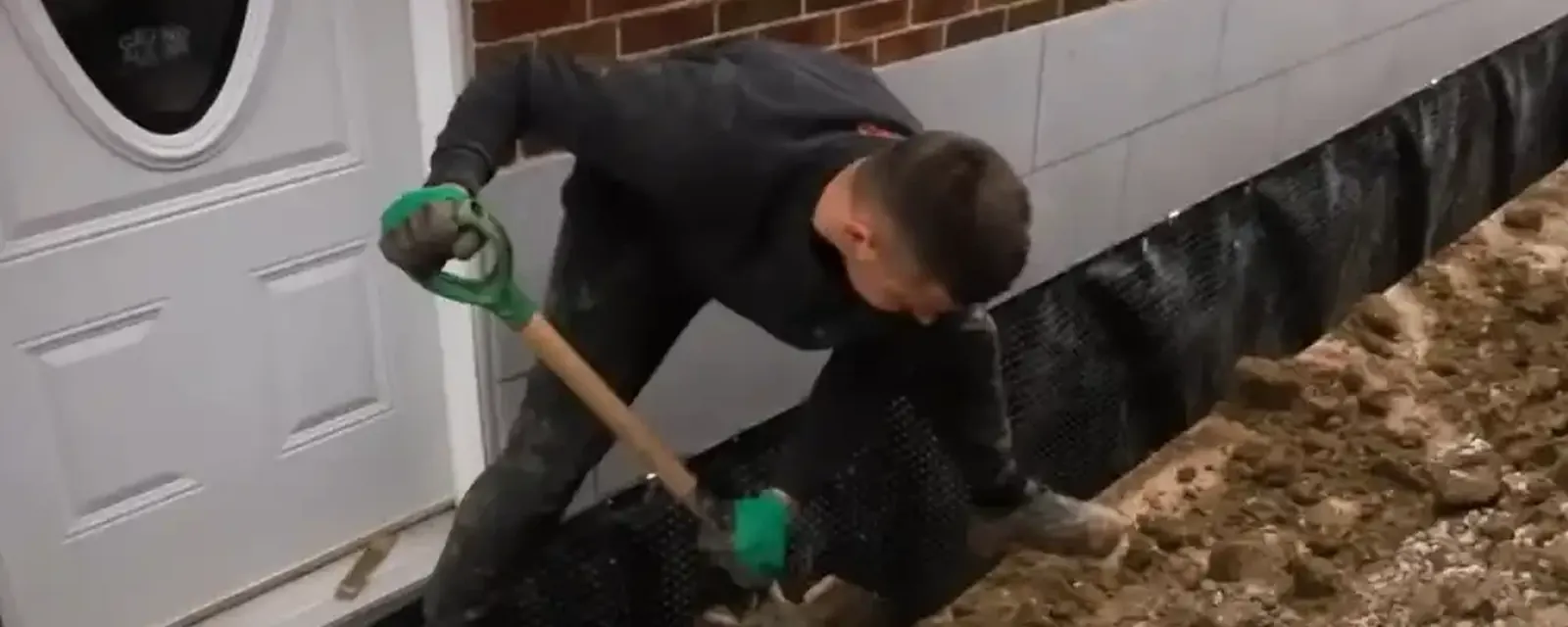
Find where the water comes from
Before you fix anything, learn how water gets in. Note when it appears. Water within minutes of rain points to surface flow, such as a downspout dumping at the wall. Water a day later points to groundwater pressure against the foundation. Water with no rain points to plumbing.
Look at where the water appears. Water along the joint between floor and wall suggests groundwater, while water coming through the middle of a wall suggests surface flow.
Step one: gutters, downspouts and grade
- Clean gutters so they carry water to the downspouts.
- Extend downspouts several feet from the foundation.
- Regrade soil so it slopes away from the house.
- Keep mulch and flower beds from trapping water against the wall.
- Clear window wells and cover them if they collect rain.
- Seal obvious cracks in sidewalks and patios that slope toward the house.
These cost little and often solve a large share of the problem. Do them before paying for interior work.
Step two: interior drainage
If water persists, an interior perimeter drain collects water at the footing and sends it to a sump pit. A pump moves it outdoors. This approach manages groundwater pressure without digging around the foundation. See sump pump repair and installation for the pump side.
Sealants and paints applied to the wall can slow minor dampness, though they do not stop water under pressure. Be skeptical of a product that promises to fix a wet basement by itself.
Step three: check the plumbing
A basement can be wet because of a leak. A supply line, a water heater or a washing machine hose can all add water. If the meter moves with the house shut off, see leak detection. A sewer backup is a different problem, and sewer line cleaning covers it.
What waterproofing cannot do
Waterproofing does not fix a structural problem. Wide, stair-step or widening cracks need an opinion from a structural professional. A basement wall that bows inward is an urgent case. Plumbing can manage water, and it cannot repair a failing wall.
What drainage pros look for
A professional visit usually starts outside. The inspector looks at the grade, the gutters and downspouts, the window wells and any cracks in the foundation. Inside, they look at where the water enters, the type of wall, the floor drain and any existing pump.
They also ask questions. When did the water first appear? Has it changed? How much, and how often? The answers separate a recent problem, such as a gutter that came loose, from a long-term one, such as rising groundwater. A good diagnosis saves you from paying for a fix to the wrong problem.
Budgeting in stages
Waterproofing work can be staged, and it usually should be. Start with the low-cost steps and wait through a rainy season. If water still enters, add interior drainage and a pump. Staging keeps you from overspending, and it also teaches you which fixes mattered. Keep notes after each storm, and tell the contractor what you saw.
Common mistakes that waste money
The most frequent mistake is paying for interior work before checking the gutters. A downspout that empties beside the foundation can put hundreds of gallons against the wall in one storm, and no sealant will fix that. The second is painting over damp walls, which traps moisture and peels within a season.
A third mistake is treating every wet spot the same. Condensation on a cold wall in summer is not a leak, and a tape test helps. Tape a square of plastic wrap to the wall for a day. Moisture under the plastic means the water comes through the wall, while moisture on the outside means humidity in the room.
Humidity and air quality after water
Even a small amount of water leaves the basement humid for days. Run a dehumidifier, move boxes off the floor and let materials dry fully. Mold can start within a couple of days on wet drywall, paper and cardboard. Throw out soaked porous items, and call a restoration professional if a large area stayed wet.
What the utility guidelines say
According to Johnson County Wastewater, connecting a sump pump to the sanitary sewer is against code. Keep that guideline in mind when you plan where interior drainage will send water.
Local note: storm water, sanitary sewers and who handles what
Johnson County Wastewater handles sanitary sewers, and its FAQ says storm sewer problems go to your city hall instead. That matters when water in the basement comes with heavy rain, since street drains and sump discharge belong to the storm system. The utility also states that connecting a sump pump to the sanitary sewer is against code, and its JoCo Inflow program evaluates private sources of stormwater entering the sanitary line and pays for approved repairs.
If your downspouts or area drains connect to the sanitary sewer, that program is worth a call. If you live in Overland Park or Prairie Village, ask your city about storm drainage on your street.
Questions about waterproofing a basement in Leawood
If water enters regularly, yes. Dampness from humidity needs a dehumidifier more than a drain.
If groundwater collects at the footing, a sump pit and pump are the usual answer.
Often not for groundwater or surface flooding. Ask about a water backup endorsement.
Grading, gutters and downspouts are good DIY steps. Interior drainage is a larger job.
If it shows up with no rain and the meter moves, it is plumbing. If it follows rain, it is groundwater or surface flow.