
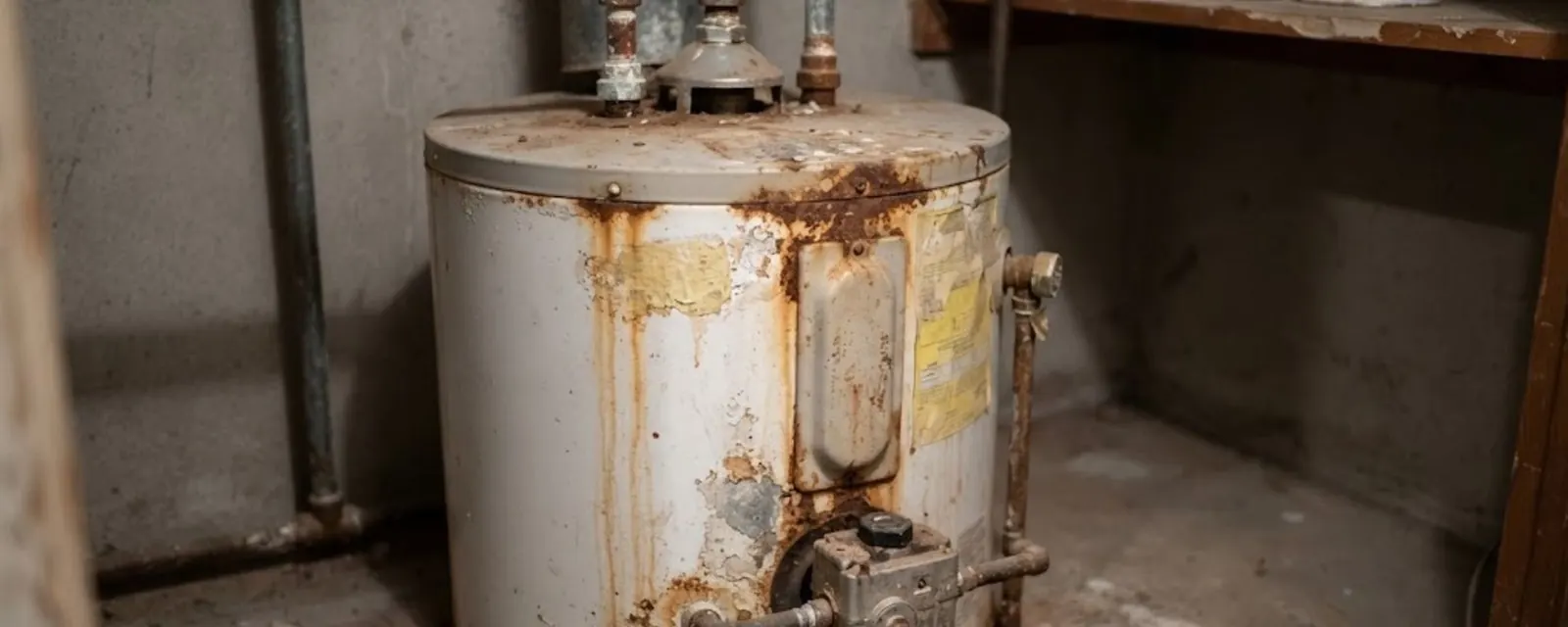
Water heater problems that cannot wait
Some failures are inconvenient and others are urgent. Water pooling around the base, a hot-water smell of sulfur or rotten eggs, scalding water that will not cool, or a pilot that keeps blowing out on a gas unit all justify a call right away. A tank that leaks from the seam is usually done, and we will tell you that early.
We take water heater emergencies at night and on weekends, and same-day appointments are available when the schedule allows. A gas unit with a strong gas smell is different: leave the house and call your gas utility or 911 before you call us.
What goes wrong, and what repairs it
Gas and electric tanks fail in different places. A gas unit usually needs a thermocouple, gas control valve or burner cleaning. An electric unit usually needs a heating element or thermostat. Either type can have a bad temperature and pressure relief valve, a worn dip tube or a drain valve that seeps.
Repair makes sense when the tank itself is sound. A 12-year-old unit with a rusting base is a different case, and replacement is usually the better value. Ask us for a straight comparison of the two prices.
Hard water and your tank
WaterOne has published a hardness goal of 120 to 140 mg/L, right at the line between moderately hard and hard on the USGS scale. It comes from an older publication, so check WaterOne's current water quality report for today's figure. Water in that range leaves mineral scale that settles on the tank bottom and coats heating elements.
The result is a tank that pops, takes longer to heat and wastes energy. A yearly drain and flush slows that, and checking the anode rod every few years extends tank life. Both are routine work we can add to a repair visit.
Quick checks before you call
- Gas unit: check that the pilot is lit and the gas valve is on.
- Electric unit: reset the breaker and press the red reset button on the upper thermostat.
- No hot water at one tap only: the fixture, not the heater, is the problem.
- Water not hot enough: check the thermostat, which should be near 120 degrees for most homes.
- Water on the floor: close the cold-water valve and call.
What water heater repair costs: the factors
You get a clear price before work starts. The price moves with:
- The failed part and whether it is in stock.
- Gas or electric, and the tank's age and size.
- Whether corrosion or sediment is also a problem.
- Access around the heater in a closet, basement or garage.
- Whether it is an after-hours emergency or a scheduled visit.
Insurance may respond to damage from a sudden tank leak, though not to the cost of the heater itself in most cases. Want to know what yours needs? Call (855) 575-2890.
Safety first when a heater misbehaves
Never block or cap a relief valve, even if it drips. Dripping means the valve is doing its job or the tank is under too much pressure, and either one needs a plumber. If you smell gas, leave the house and call your gas utility or 911. Gas tank heaters follow ANSI Z21.10.1, and a tech should check the vent and the flame before leaving.
Standards a repair should respect
Gas tank water heaters follow ANSI Z21.10.1, and the manual lists the vent, the flame and the relief valve guidelines. A repair should leave all three in working order.
Water heater repair questions
Yes. The 24/7 line takes water heater calls at any hour. Tell us whether the unit is gas or electric, how old it is and whether it is leaking. We book same-day appointments when the schedule allows and give a clear price before work starts.
Many last roughly 8 to 12 years, with hard water, sediment and a neglected anode rod shortening that. Past 10 years, repairs often cost nearly as much as the savings from a new, more efficient unit.
Sediment on the tank bottom traps water that boils underneath it. A flush often quiets it, though a heavily scaled tank may not recover.
If the leak is at a fitting, valve or drain, repair is usually fine. If water seeps from the tank body, the tank has corroded through and needs replacement.
Yes. Error codes, scale buildup and igniter faults are common, and tankless water heater service often starts with a descaling flush.
Permit rules vary, so ask the Leawood building department. We can tell you what the job involves, and you can confirm the local requirement.