
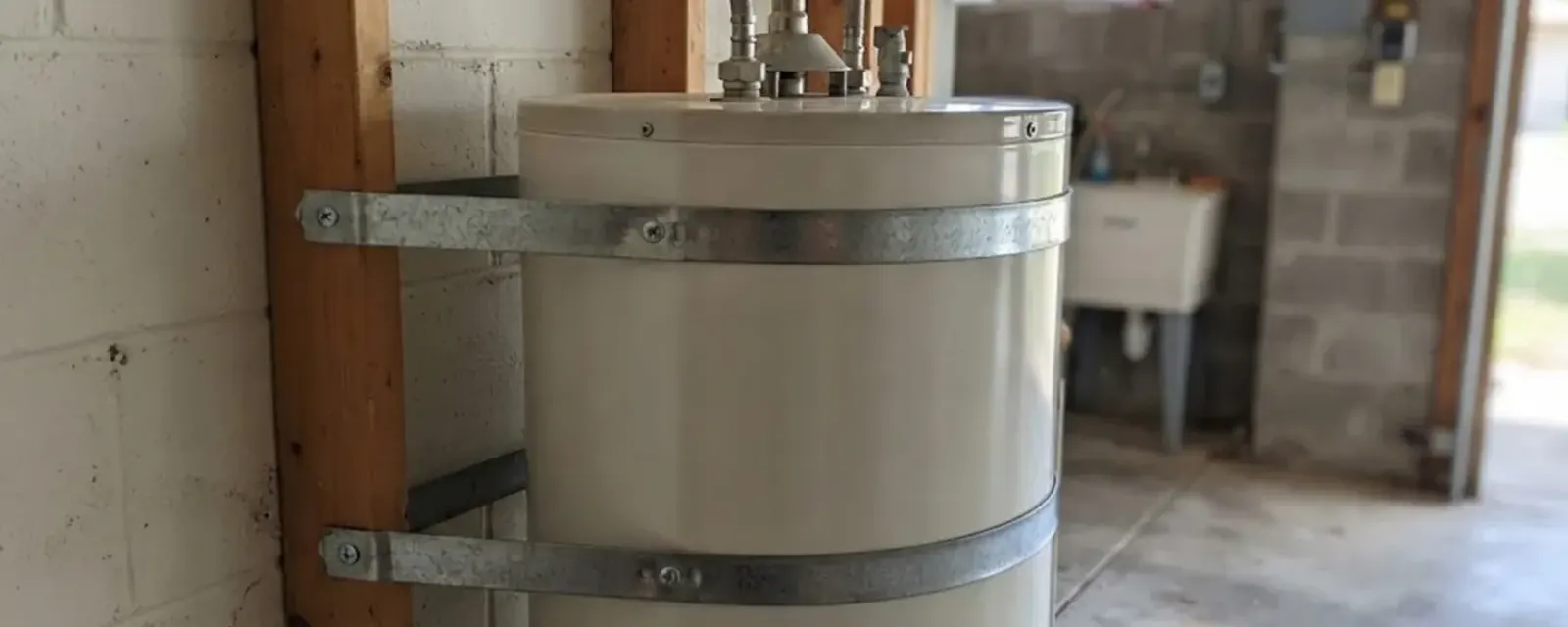
When a failed water heater is an emergency
A tank leaking from its body cannot be repaired, and it will get worse. If the floor is wet, the unit is rusted at the base or water runs from beneath the jacket, replacement is the answer. A cold house in January makes it more urgent.
We handle replacement emergencies at night and on weekends, and same-day appointments are available when the schedule allows. Shutting off the cold supply and the fuel buys you time and stops the damage from growing.
Repair or replace: a straight comparison
| Situation | Usual answer | Why |
|---|---|---|
| Under 8 years, leaking at a valve or fitting | Repair | The tank is sound |
| 8 to 12 years, one part failed | Either, compare prices | Parts cost may approach the savings |
| Over 12 years, any failure | Replace | Corrosion risk and low efficiency |
| Water from the tank body | Replace | The tank has corroded through |
| Rusty hot water with a sediment buildup | Replace | The interior lining is failing |
What replacement involves
We drain the old tank, disconnect the gas or electric supply, and haul the unit away. The new heater is set, connected to new flexible lines, and fitted with a temperature and pressure relief valve and a discharge line. On gas units, we check the vent for draft and the gas connection for leaks before we light it. For a home in a neighborhood developed in the 1970s and 1980s, see our Leawood South page.
Many homes also need an expansion tank when the water system is closed, because heated water expands and can drive pressure up. We check the thermal expansion setup and tell you if it needs updating. Ask the Leawood building department about permit requirements, since rules vary.
Choosing a replacement: size, fuel and type
Match tank size to household demand. A 40-gallon unit often suits two or three people, while a family of four or five tends to use a 50-gallon or larger tank. Gas recovers faster than electric, and a heat pump unit uses less electricity but needs space and airflow.
You can also move to a tankless unit at replacement time. It saves floor space and heats on demand, though it costs more up front and may need a larger gas line. If you are planning rather than reacting, see water heater installation.
What replacement costs: the factors
You get a clear price before work starts. It moves with:
- Tank size and fuel type.
- The model and warranty you choose.
- Venting, gas line or electrical changes.
- Access and haul-away.
- Whether it is an after-hours emergency or a scheduled visit.
Insurance may pay for water damage from a sudden tank failure but typically not for the heater itself. Keep photos and the old unit's label. Want your real number? Call (855) 575-2890.
Safety checks we expect on every swap
A replacement is a chance to bring an old setup up to current practice. The relief valve and its discharge pipe should be new or tested, the gas connection should be leak checked, and the vent should slope and seal properly. Gas tank models follow ANSI Z21.10.1. Ask which items the quote covers, and ask the Leawood building department whether your job needs a permit.
Standards a replacement should meet
Gas tank water heaters follow ANSI Z21.10.1, and the manual lists the vent, clearance and relief valve guidelines. A good replacement meets all of them.
Water heater replacement questions
Yes. The 24/7 line takes failed-heater calls at any hour. Tell us the size, fuel and location of the unit. We book same-day appointments when the schedule allows and give a clear price before work starts.
Read the serial number on the data plate. Most manufacturers encode the month and year in the first digits. If you cannot decode it, give us the brand and number and we will.
No. Hard water scale shortens any tank's life. WaterOne has published a hardness goal of 120 to 140 mg/L, so scale is a fact of life here. A softener changes that, though WaterOne notes softened water can be more corrosive to home plumbing.
Yes, though it needs a dedicated circuit and may need an electrical upgrade. We go over the tradeoffs before work starts.
A straightforward like-for-like swap is usually done in a few hours. Venting or gas changes add time, and we say so up front.
Yes. Haul-away is part of the job.