
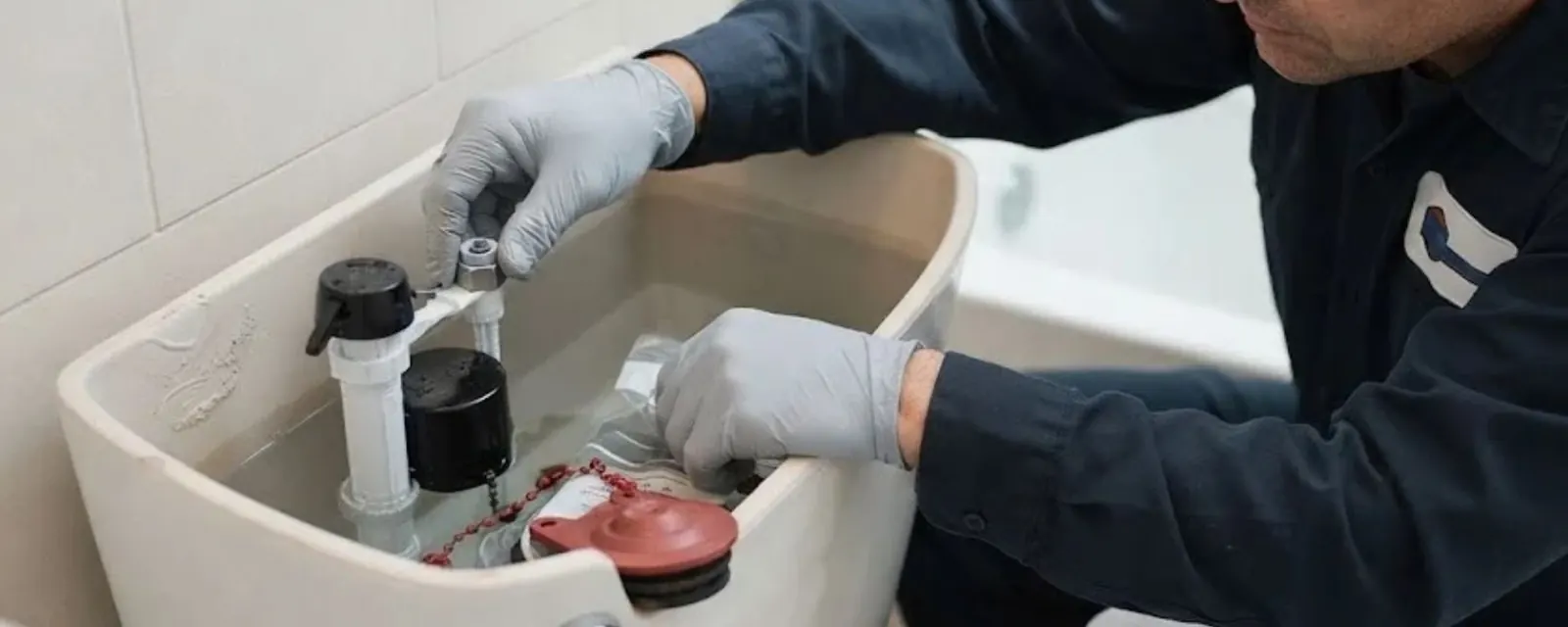
When a toilet problem is urgent
Water on the floor is the line between annoying and urgent. An overflowing bowl, a leak at the base or a supply line spraying behind the tank needs same-day attention, since water soaks subfloor quickly. A toilet that runs constantly wastes water and can raise a bill.
We handle toilet emergencies at night and on weekends, and same-day appointments are available when the schedule allows. The shutoff valve behind the toilet stops the supply, and a plunger can clear a simple clog while you wait.
What fails, and how we fix it
- Running toilet: worn flapper, fill valve or chain, usually a quick repair.
- Weak flush: partial clog, clogged rim jets or low tank water level.
- Leak at the base: failed wax ring or loose closet bolts, which means pulling the toilet.
- Rocking toilet: loose bolts or a damaged flange.
- Phantom flushing: a flapper leaking slowly into the bowl.
Try the food coloring test. Add a few drops to the tank. If color reaches the bowl without flushing, the flapper is leaking.
When the clog is bigger than the toilet
If the toilet backs up and other fixtures gurgle, the problem may be the main line. Stop flushing and see sewer line cleaning. If only the toilet clogs, a closet auger usually clears it, and drain cleaning covers deeper blockages. Chemical cleaners can damage old pipes, and Johnson County's Environmental Division handles household chemical disposal.
Toilet installation and replacement
A new toilet is worth considering when the old one cracks, rocks on a damaged flange or flushes poorly. A WaterSense label means the model meets EPA efficiency and performance criteria, including a flush of 1.28 gallons or less. That compares with 1.6 gallons for the federal standard and far more for toilets installed decades ago.
We set the toilet on a new wax ring or seal, check the flange for damage and connect a new supply line. If the flange is cracked or corroded, we repair it, because a good toilet on a bad flange will leak again.
What toilet repair costs: the factors
You get a clear price before work starts. It moves with:
- Repair or full replacement.
- The part that failed and whether the flange needs work.
- Toilet model, if you are replacing it.
- Whether the clog sits in the main line.
- Whether it is an after-hours emergency or a scheduled visit.
Call (855) 575-2890 for a clear price.
Why a toilet that rocks needs attention
A toilet that moves when you sit on it has a loose connection to the floor. The bolts may be loose, the flange may be broken, or the floor may have softened around it. A rocking toilet strains the wax seal, and a failed seal leaks wastewater under the floor where nobody sees it.
Tighten the bolts gently in alternating turns, without cracking the porcelain. If the rocking comes back, pull the toilet and look at the flange. A cracked flange needs a repair ring, and a soft floor needs repair before the toilet goes back.
Water use ratings
Toilets with the EPA WaterSense label use no more than 1.28 gallons per flush. Older models use more, and replacing one can lower the water bill. Ask for the MaP score or the flush rating if you plan to buy a model, since a lower flow toilet that flushes poorly will clog.
Toilet repair questions
Yes. The 24/7 line takes calls at any hour. We book same-day appointments when the schedule allows and give a clear price before work starts.
Usually a worn flapper or fill valve. The fix is small, and ignoring it wastes water.
If it flushes well and is not cracked, yes. A toilet that clogs often, leaks at the base or has a damaged flange may be better replaced.
The pipe fitting on the floor that the toilet bolts to and seals against. A bad flange causes leaks and rocking.
Yes. We check the flange, supply line and clearances first.
If shutting the supply does not stop it, or sewage reaches the floor, yes. Call the 24/7 line.