
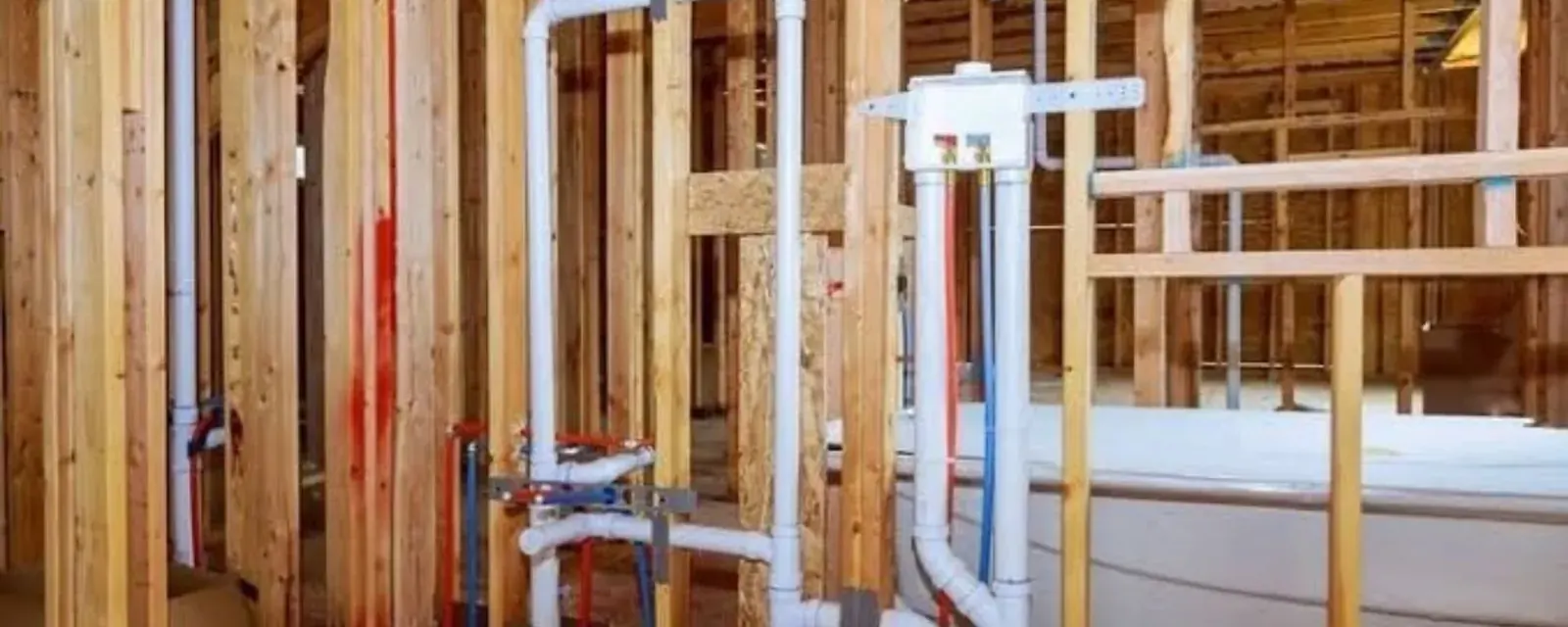
What we install
- Sinks, faucets, toilets, tubs and showers.
- Dishwasher, washing machine and ice maker connections.
- Garbage disposals and kitchen islands with new drains.
- Outdoor hose bibs and frost-free faucets.
- New bathrooms, basement rough-ins and laundry rooms.
- Water lines for appliances and gas line connections to appliances where the work allows.
Each project begins with the same three questions: where does the water come in, where does the waste go and how does the fixture vent. Answers shape cost and schedule.
Supply, drain and vent
Every fixture needs a supply, a drain with a trap and a vent that lets air in behind the water. A basement bathroom adds another challenge, since waste must reach the sewer, and gravity may not do it. In that case a sewage ejector or an up-flush system lifts it.
Venting is the step amateurs most often miss. Without a vent, drains gurgle and traps siphon dry, letting sewer gas in. See the drain cleaning page for clog troubleshooting afterward.
Standards and permits
Plumbing work follows model codes, and local jurisdictions adopt and amend them. Ask the Leawood building department which code edition and permit rules apply to your project, since those rules vary and change. We tell you what the job involves so the conversation with the city is simple.
Planning around Leawood homes
Homes built across decades have different pipes. Older houses may have galvanized supply or cast iron drains that complicate a tie-in, while newer homes use PEX and PVC. A tie-in to old pipe sometimes reveals problems, which is why we look at the existing system first. If the supply is failing, see repiping.
Fixtures worth upgrading
Low-flow toilets and faucets cut water use, and the EPA's WaterSense label identifies models that meet its criteria. A new water heater pairs well with a bathroom remodel, and a disposal often goes in with a kitchen update.
What installation costs: the factors
You get a clear price before work starts. It moves with:
- Fixture type and grade.
- Distance to supply and drain lines.
- Venting and wall or floor access.
- Permit needs.
- Whether pipes must be replaced to connect.
Call (855) 575-2890 to talk through your project.
Planning a bathroom or kitchen project
A remodel is easier to price when the plumbing is decided early. Before you order fixtures, decide where each one goes, because every move changes the cost. Moving a sink a few feet along the same wall is simple. Moving a toilet across a room means new drain pipe, and a drain needs slope, so the distance to the main stack matters.
Bring a sketch and the fixture model numbers to the first visit. A pull-down faucet, a freestanding tub or a wall-hung toilet each has installation needs, such as blocking inside the wall or a larger drain. We tell you what each one needs before you buy.
Basement bathrooms and drains below the sewer
Adding a bathroom below grade is possible, though the drain is lower than the main sewer line in some homes. A sewage ejector basin collects waste and a pump lifts it to the main drain. An up-flush toilet is a compact alternative for a single fixture. Both need a vent and an access cover, and both need a power source.
Check the existing floor drain first. It shows how deep the sewer line is and whether gravity can serve the new fixtures. A camera can also show the line's condition before you add load to it, see sewer camera inspection.
Appliance hookups
Washing machines need a hot and cold supply with a drain standpipe at the right height. Ice makers need a small supply line with a shutoff. A dishwasher needs a supply, a drain connection and either a high loop or an air gap. Gas ranges and dryers need a gas connection that is tested for leaks. Each is small work and each can cause real damage if done carelessly, which is why a clean, tested connection matters more than speed.
Plumbing installation questions
Often yes. We check that the model suits the connections and can warn you about problems before you buy.
Usually. Distance to the drain and vent determines difficulty.
Appointments are available when the schedule allows, including same-day for urgent needs.
We stop, show you, and discuss options before changing the scope.
Rules vary, so ask the Leawood building department.
Call the 24/7 line. It is open nights and weekends.