
How the pieces fit
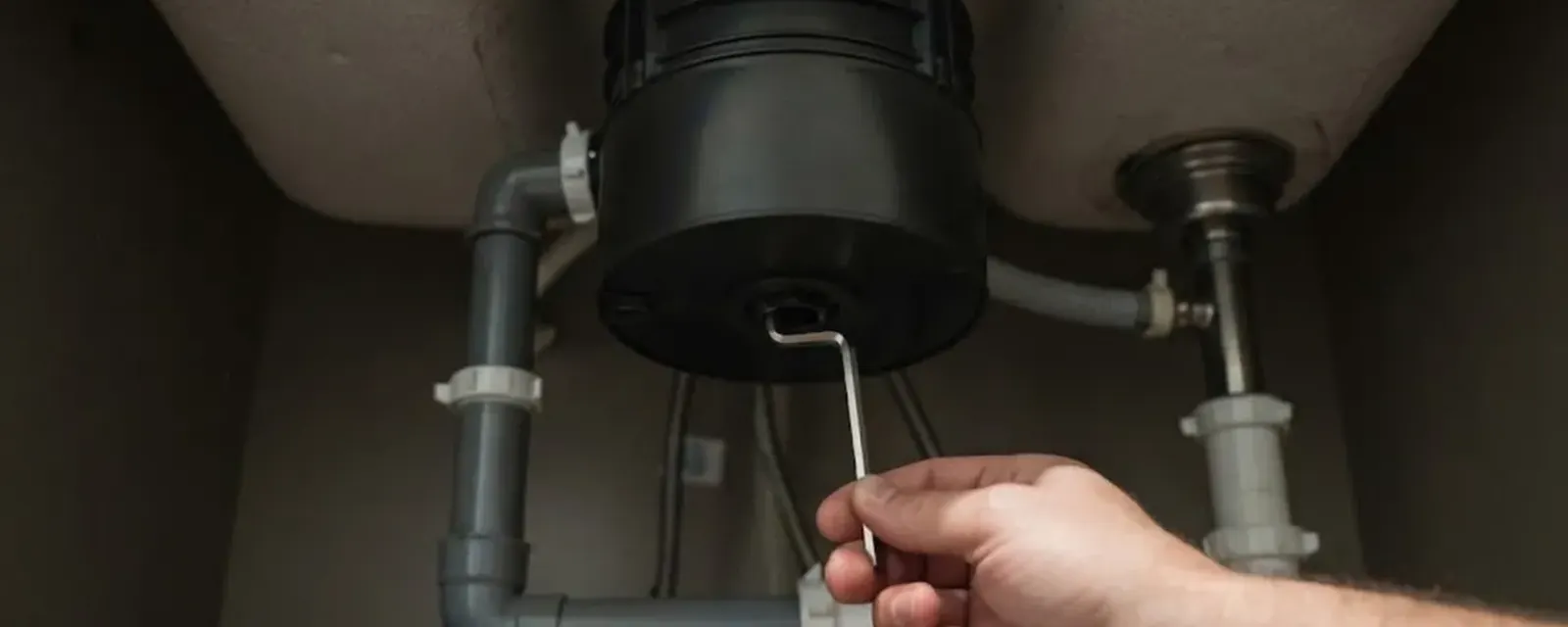
A garbage disposal hangs under the sink from a mounting ring attached to the sink flange. The grinding chamber sits in the unit, and a side outlet sends ground waste into the drain trap. A separate inlet on the side takes the dishwasher drain hose.
Three connections matter most: the flange seal at the sink, the elbow or tailpiece to the trap, and the dishwasher inlet. A weak seal at any of them leaks, and under a sink the leak is hidden until it rots the cabinet floor.
Before you start
- Cut power at the breaker before touching any wiring.
- Check for an outlet or a switch for the disposal, since many homes lack one.
- Measure the space under the sink, because the unit hangs low.
- Note whether your sink drain has one basin or two.
- Look at the dishwasher drain, which must connect to the disposal or to an air gap.
Plan for a switched outlet under the sink. A disposal wired to a switch above the counter is safer than one that plugs in beside the trap.
The install, step by step
- Remove the old strainer assembly and clean the sink opening.
- Seat the new flange with plumber's putty and tighten the mounting ring from below.
- Knock out the dishwasher plug inside the inlet, if the dishwasher connects here.
- Hang the disposal on the mount and rotate it into place.
- Connect the discharge elbow to the trap with a gasket and tighten it.
- Attach the dishwasher hose with a clamp, looped high before it connects.
- Wire the unit or plug it in, restore power and test with water running.
Knocking out the plug inside the dishwasher inlet is the step people forget. Without it, the dishwasher cannot drain, and the water backs up into the dishwasher.
Common mistakes
- Skipping the dishwasher plug knockout.
- Overtightening the mounting ring, which cracks the flange seal.
- Using too little putty or none at the flange.
- Sloping the drain the wrong way, so water pools in the trap.
- Using a trap arrangement that cannot vent, which causes gurgling.
If your drain slopes the wrong way or the trap does not vent well, a plumber can fix it. See plumbing installation for related work. If the sink backs up after a new unit goes in, drain cleaning is the next step.
What not to grind
Grease, oil and fat coat the pipes and harden. Fibrous scraps such as celery, corn husks and onion skins tangle. Pasta, rice and potato peels swell. Coffee grounds in bulk clump. Bones and fruit pits jam. A disposal handles soft food scraps and small amounts of rinse water, and it is not a trash can.
Testing the new connections
After the unit is installed, test it before you close the cabinet. Run cold water for a minute with the disposal off and watch every joint with a dry paper towel. Turn the disposal on and run it for 30 seconds, then feel again under the trap, the flange and the dishwasher hose. Do the test with the dishwasher draining, too, because a hose connection that looks fine at rest can leak under flow.
If you see a drip, tighten the connection a quarter turn and recheck. Overtightening cracks plastic fittings, so go slowly.
Noise and vibration
A disposal that rattles or hums loudly may be touching the cabinet or a pipe. Check that the unit hangs freely, that the mounting ring is tight and that nothing rubs against it. A rubber splash guard that is worn can also make a flapping noise. Most noise problems come from installation details, not a bad unit.
Electrical rules for disposals
A hardwired disposal follows the National Electrical Code (NEC), and the manufacturer guidelines list the wiring steps. If you are not sure how a circuit is wired, have a qualified person do that part.
Local note: what goes down Leawood drains
Johnson County Wastewater states that household chemicals should not go down drains, and it points residents to Johnson County's Environmental Division for disposal. That includes caustic drain openers, which can also damage a disposal's seals and old pipe. Kitchen grease, in particular, ends up in the sewer main, where it contributes to backups.
Pipe age changes how forgiving a kitchen drain is. In an older house, such as many in Prairie Village, cast iron has rougher walls that catch more grease. Smooth PVC, common in newer houses in Overland Park, is more forgiving but still clogs with fat.
Questions about plumbing a garbage disposal in Leawood
Yes, if there is an outlet or wiring option and room under the sink. A plumber can add both.
Many are on a shared kitchen circuit, though a dedicated circuit is better. Check the unit's amp rating and your panel.
A leak at the bottom means a cracked housing, which means replacement. A leak at the top means the flange seal needs redoing.
Some codes require an air gap or a high loop. Ask the Leawood building department what applies.
Half horsepower suits light use, and three-quarter to one horsepower handles heavier use and runs quieter.