
Start with sizing, not price
The most common installation mistake is the wrong size. A heater that is too small runs out of hot water mid-shower. One that is too large heats extra water all day. The first-hour rating on the unit's yellow label tells you how much hot water it delivers in its first hour, and that number should match your busiest hour.
Count what runs together on a typical morning. Two showers, a dishwasher and a load of laundry draw far more than one shower alone. A household of two or three often fits a 40-gallon tank, and four or five people usually need 50 gallons or more. Bigger families, soaking tubs or a second water heater for a far bathroom change the math.
Pick the fuel and the type
Gas, electric, heat pump and tankless units all work in Leawood homes, and each suits a different setup. A gas tank recovers quickly and costs less to run where gas is already piped. An electric tank is simple to install and needs no vent. A heat pump water heater uses much less electricity but needs air space and a drain for condensate.
A tankless unit heats on demand and frees floor space, and it has its own page, tankless water heater service. Switching fuel is possible, though it can mean a new gas line, a new circuit or a different vent, so ask for that cost up front.
What happens on installation day
- The old tank is shut off, drained and disconnected.
- The new unit is set on a drain pan or a stand if the floor needs protection.
- Water lines are connected with new flexible connectors and a shutoff valve.
- A temperature and pressure relief valve and its discharge line are installed.
- Gas units get a sealed gas connection and a draft check on the vent.
- Electric units get a properly sized circuit and a safe connection.
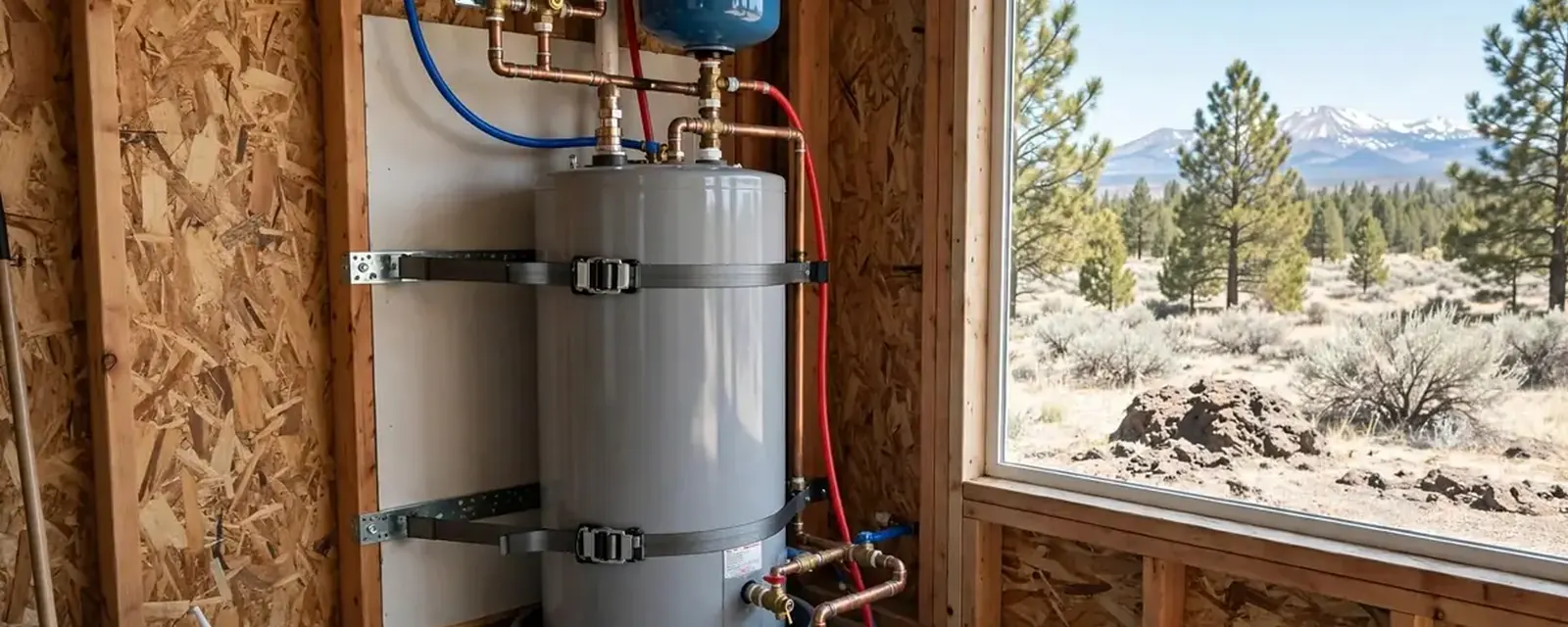
- An expansion tank is added when the system is closed.
- We fill the tank, purge air, light or energize the unit and test the output.
A straightforward swap takes a few hours. Vent changes, gas line sizing or access problems add time, and we say so before we start. We remove the old unit when we finish.
The expansion tank question
Heated water expands. In an open system, the extra volume goes back into the city main. Many homes have a backflow device or a pressure reducer that closes the system, so the expansion has nowhere to go and pressure spikes. An expansion tank absorbs it. Without one, you can see a dripping relief valve or premature fixture wear.
Ask whether your install includes one, and ask how the installer checked. A quick pressure gauge reading at a hose bib tells you a lot.
What affects the price
Installation price depends on the unit, the fuel, the venting and the access. A like-for-like swap in an open basement costs less than moving the heater to a tight closet. Permit fees, code upgrades and the cost of the unit's warranty level matter too. We give a clear price before work starts, and we explain what is included so quotes can be compared fairly.
If your old tank has already failed, urgency changes the schedule, not the quality of the work. Our page on water heater replacement covers that path, and the 24/7 line is open for a leaking tank.
Questions to ask before you sign
Ask who pulls the permit if one is needed, what the warranty covers and for how long, and whether the quote includes a new relief valve, a drain pan and flexible connectors. Ask how the old unit is removed and whether disposal is included. A clear written scope protects both sides, and a price that leaves these out is not the same price as one that includes them.
Standards behind a good installation
Gas tank water heaters are built to ANSI Z21.10.1, and installation guidelines in the manual cover venting, clearances and the relief valve. A good installer follows them and shows you each item.
Local note: Leawood water and permits
WaterOne supplies drinking water to Leawood. In an older publication it said it aims to keep treated water hardness between 120 and 140 milligrams per liter, and that the raw river water often exceeds 250. Hardness at that level leaves scale in a tank, so the drain valve location and an anode rod check matter when you choose and place a heater. WaterOne's current annual water quality report has today's numbers.
On permits, rules vary by city and project, so ask the Leawood building department whether your water heater install needs one. If you are across the line in Overland Park or Prairie Village, ask that city, since each has its own office.
Questions about water heater installation in Leawood
A like-for-like replacement usually takes a few hours. Changes to venting, gas lines or circuits add time, and we tell you before starting.
If the unit is past 10 years old or leaks at the base, planning ahead gives you time to choose a model and a convenient day, instead of an emergency swap on a cold night.
Not always. Needs change when family size changes. Check the first-hour rating against your peak use.
Yes, for the length of the installation. Plan on a few hours without hot or cold water in the house.
Water at the hardness WaterOne has described leaves scale, so plan an annual flush and an anode rod check. Ask the installer to place a drain valve where you can reach it.